Electronics
63 posts in this category
AI that writes code is old news. This is what it does for me once that code has to drive real electronics: firmware, testing over USB, parts and schematics, measurements and old hardware, and where it …
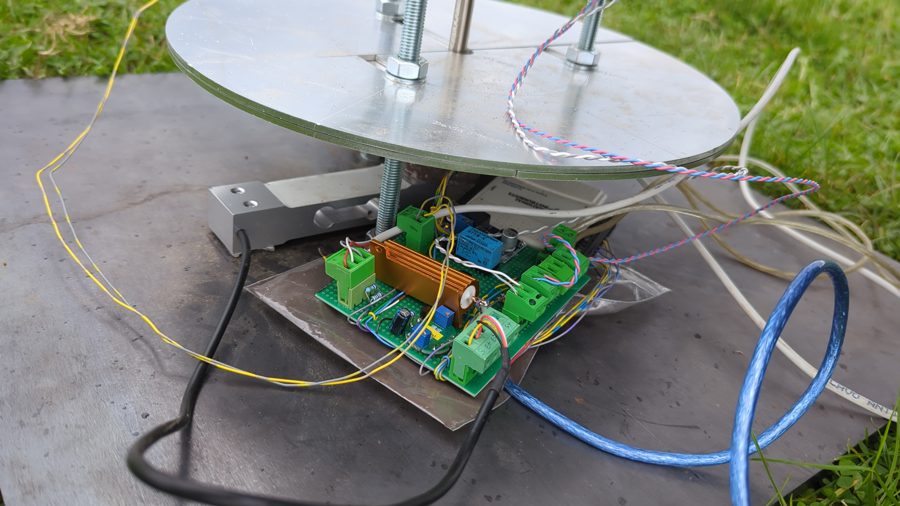
A Python data logger for static motor tests on an old NI USB-6009: thrust, chamber pressure, break wires and igniter current, in the order a test day runs. Successor to my 2008 and 2010 test …

How the wireless launch controller works inside: the functional design, firmware architecture, the full list of safety measures, the encrypted radio protocol, sensing and how it was tested.

A two-unit wireless rocket launch controller for VRO, built on ESP32-S3s with an encrypted radio link, and the case for why done properly it is safer than a long firing cable.
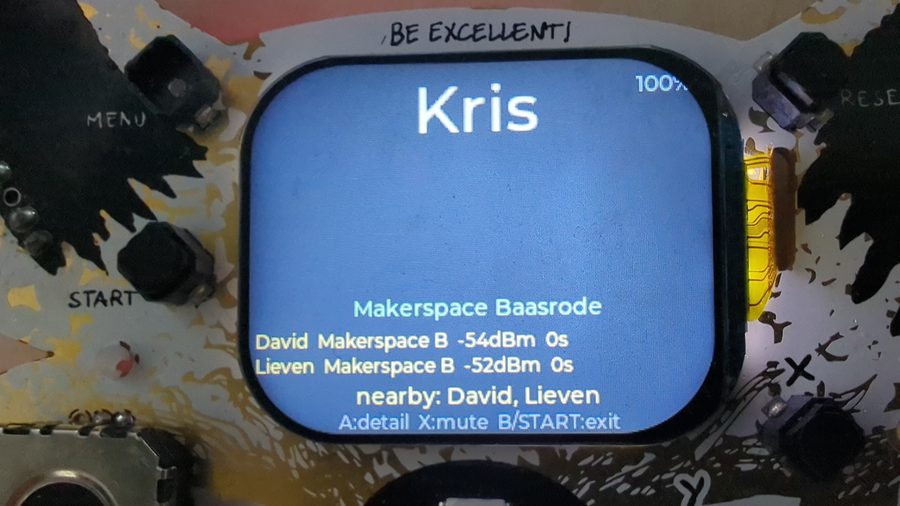
A Fri3d Camp 2026 badge app that tells you when your friends are nearby over Bluetooth, swaps contact details with a button press and is set up from a phone. It also has a camp-wide game of Gotcha.

How I went from an idea to a published Fri3d Camp 2026 badge app in an afternoon with AI-assisted coding, step by step, so you can do the same.
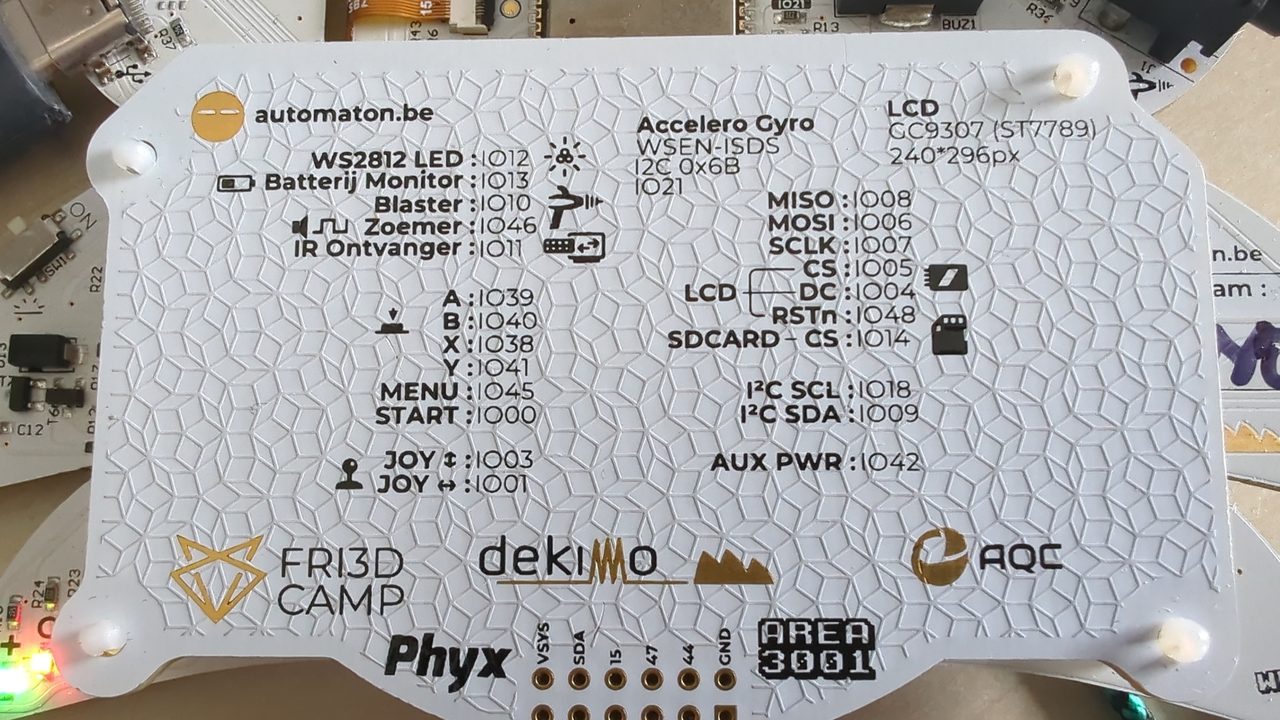
A complete ESPHome configuration for the Fri3d Camp 2024 badge, so it shows up in Home Assistant with its motion sensor, LEDs, display and battery. Covers the driver choices that were needed.
A hands-on guide to writing your own apps for the Fri3d Camp 2024 badge with Claude Code: backing it up, the firmware model, MicroPython and a real app with the fri3d framework.

Building a Dutch word clock from the DJO Amersfoort design, with a few changes of my own to the case, and tracking down why it showed the wrong time after it was finished.

An attempt to read a Platinum 3100S solar inverter directly over its proprietary RS485 protocol with an ESP32. It has not cracked yet, so the full dataset is published for anyone who wants a go.

Predicting where a weather balloon’s radiosonde will land from its own radio telemetry alone, testing it on a real flight, and backtesting it against years of launches from Uccle.

An ESP32-C3 that controls a RunCam Thumb over its serial protocol: start recording the moment power arrives, and check and control the camera from a web page on its own Wi-Fi access point.
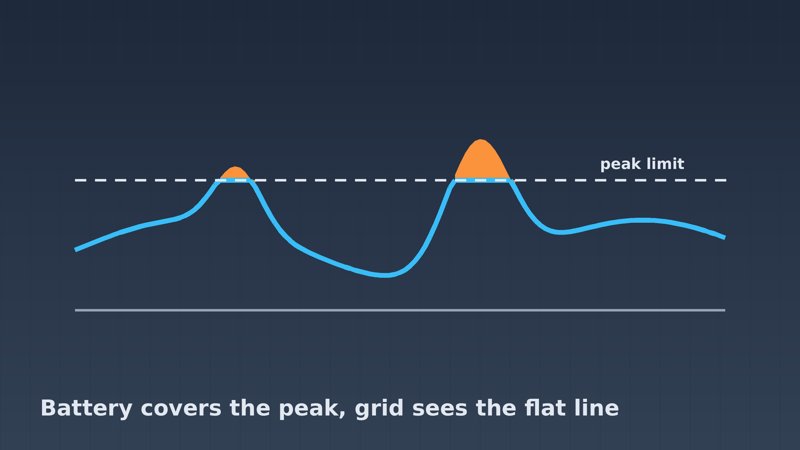
Keeping the Belgian capacity tariff down with three Marstek Venus E batteries and Home Assistant: how the kwartierpiek is billed, the settings that matter and two traps I nearly fell into.

Getting a second-hand Solar-Log 500 to read my Platinum 3100S solar inverter over RS485 and feed its production into Home Assistant. The wiring polarity and the firmware were the real obstacles.

Turning an ESP32 Cheap Yellow Display into a desk panel with ESPHome that shows the house’s power use and opens the door or garage with a tap. Four gotchas along the way.

Building a TiltBox, a small wooden game console with an 8x8 LED matrix that you play by tilting it. ESP32-C3, an ADXL345 accelerometer, a home-made front panel and a few contributions back to the …

How labelling my parts storage grew from round Herma stickers to a Dymo LabelWriter driven by a LibreOffice spreadsheet and macro, including a long fight with label orientation.

Bed buttons and wake-up lights for the kids, driven by VSCP: the lights turn green at a set time on weekdays and later at the weekend. The decision matrix rows that make it work.

Firmware v1.20 for the Mespelare node adds the Control TurnOn and TurnOff actions, needed for the kids’ bed buttons and lights. Shows where the new code hooks into the decision matrix.

Adding computer control to a Ham IV antenna rotator for satellite tracking, using K3NG’s rotator code on an Arduino Pro Micro with an LCD, and calibrating the heading.

Replacing the blown backlight bulb of a 1981 Ham IV rotator controller with a strip of LEDs, a diode, a resistor and a capacitor.

A charger that tops up five single-cell LiPo or Li-ion batteries at once from one 6 to 20 V supply, built around Microchip’s MCP73831 charge controller. Schematic and board included.
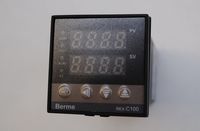
What is inside the 10 euro REX C100 PID temperature controller from eBay, in photos.

Switching lights on the VSCP bus from a web page, with buttons and status indicators that talk to the VSCP daemon over websockets. Includes the decision matrix and daemon configuration.

A short video tour of my VSCP-based home automation system.

My checklist for configuring each Mespelare node as it goes into the house: loading the register template, mapping inputs to outputs and setting the LED and output control registers.

A slow PWM controller on an Arduino with a potentiometer and a solid-state relay, to set the heating power of a Weck kettle when boiling wort.

Switching the Hasselt VSCP firmware from its non-standard 250 kbps CAN bus speed back to the 125 kbps everyone else uses. A small register change in vscp18f_init().

Making a Mespelare VSCP node switch its own relays from its own buttons, so the lights keep working when the bus is down. Covers the code hook, a configurable output mapping and output modes.
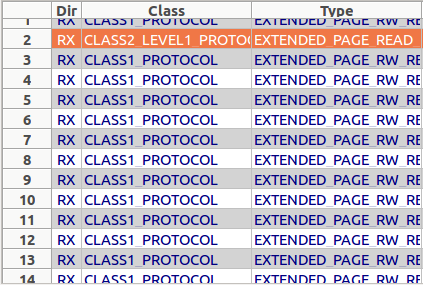
Fixing a hang in sendCANFrame() when VSCP Works reads many registers at once, with a one-second send timeout.
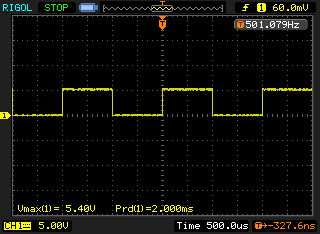
Changing the Hasselt firmware’s Timer0 tick from 10 ms to 1 ms for the Mespelare node, and updating the code that relied on the old period. Includes a scope capture of the result.

A new Pulse action for the Hasselt firmware, so the decision matrix can drive the pulse relays in my house. Firmware, MDF and decision matrix changes.

Turning a domestic oven into a PCB reflow oven with the Hobbybotics reflow controller firmware: PID temperature control, solder profiles, a display and a PC application.

How VSCP register addressing works: how registers in the MDF map onto the node’s application space and how the firmware stores them.
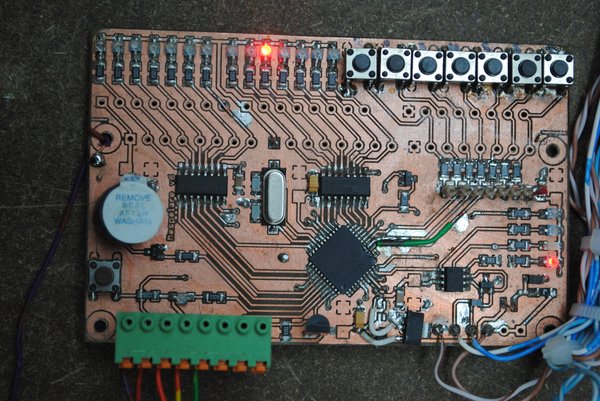
A walk through the structure of a VSCP Module Description File, from the XML header and module information to the registers, using the Mespelare module’s own MDF as the example.

Migrating the Mespelare firmware from Microchip’s retired C18 compiler to XC8, following the migration guide section by section.

Bringing a bricked PICkit3 back to life by reprogramming its firmware with a PICkit2.

A final prototype, Mespelare v9, to make sure the board design is right before ordering production PCBs. The fixes from v6, the tests and the firmware.

My roadmap for a VSCP home automation system, from the toolchain and testing Kurt’s boards to the Mespelare node, production and a reflow oven.

Updating the Mespelare node to the latest vscp_firmware from GitHub, and the compile errors and changes that came with it.

A small PIC 16F648A APRS tracker running the OpenTracker firmware, with a 300 mW HX1 transmitter on the back and a header for a GPS module. Hand-solderable 1206 parts.

A DumpEEPROM() routine that prints the node’s EEPROM over the serial port, to check what VSCP Works actually wrote. Needed because every published Hasselt MDF turned out to be wrong.

A cheap plywood cabinet that stores SMD and through-hole parts in small screw-cap yoghurt-drink bottles, each with a label on the cap.

Adding a serial debug port to the Hasselt VSCP firmware, so you can watch variables and program flow while the PIC runs. One #define switches all the debug output on or off.

Configuring the Mespelare node’s decision matrix through its registers so it reacts to events on the VSCP bus.

A function-by-function walk through the Hasselt VSCP firmware that the Mespelare node is based on, from the interrupts and main() to event handling, with a program flow diagram.

Getting the USB2CAN interface running with VSCP on Ubuntu: the driver, the VSCP daemon and testing the bus with VSCP Works.

Printing a different text on every label from an Excel list with Herma Label Designer’s database import, for labelling component jars.

Installing, configuring and testing the VSCP daemon on Windows, so several applications can share one bus interface. Includes the catches I ran into.

Modding a PlayStation 1 with a programmed PIC mod chip so it plays copied discs: how the mod works, opening the console, programming and installing the chip, and testing.

Step by step: turning a 50 MHz Rigol DS1052E oscilloscope into its 100 MHz DS1102E twin with a firmware hack, then upgrading the firmware and calibrating the scope.

A reading list for VSCP beginners: the protocol introduction and specification, VSCP Works, filters and masks, the decision matrix and setting up the daemon on Linux.

Adapting the Hasselt code to the Mespelare board: pin assignments, the MDF location and setting the registers, then running it on the hardware for the first time.

Compiling kurtsidekick’s Hasselt firmware for the first time in MPLAB X, as the starting point for the Mespelare firmware: target settings, preserving EEPROM and programming the test board.

The hardware and software I use to learn and develop for VSCP: MPLAB X, a PICkit 3, a USB2CAN converter and VSCP Works.

The Mespelare VSCP node: a CAN bus board that reads a Niko six-button panel, drives its LEDs and six relay outputs, and breaks out the rest of the pins for expansion boards.

A USB CAT interface for the Kenwood TS-50 made from a cheap USB-to-TTL adapter, and how to connect it to the radio.

A small automated brewery for 28 litre batches, built around a Weck kettle and a BrewTroller controller as a cheaper alternative to a Braumeister. A photo series of the build.

A stir plate for growing yeast, built around an 80 mm computer fan with PWM speed control, plus thermostat-controlled heating, in a two-level case.
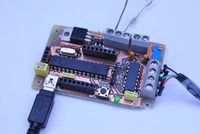
An integrated measuring system for static motor tests on the Ballistic Evaluation Motor: load cell, pressure sensor and break wires read into a computer. In Dutch.
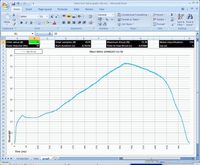
A load cell amplifier for static rocket motor tests, with the ADC on board, that plugs into USB and records the thrust curve for analysis in a spreadsheet.
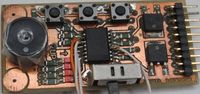
A compact four-channel rocket timer built around a PIC 16F88. It detects lift-off with an accelerometer or a reed switch and fires up to four pyro charges at programmed intervals, independently or in …

A home-built serial CAT interface for the Kenwood TS-50 so logging software can follow band and mode changes. Superseded by the USB version.